

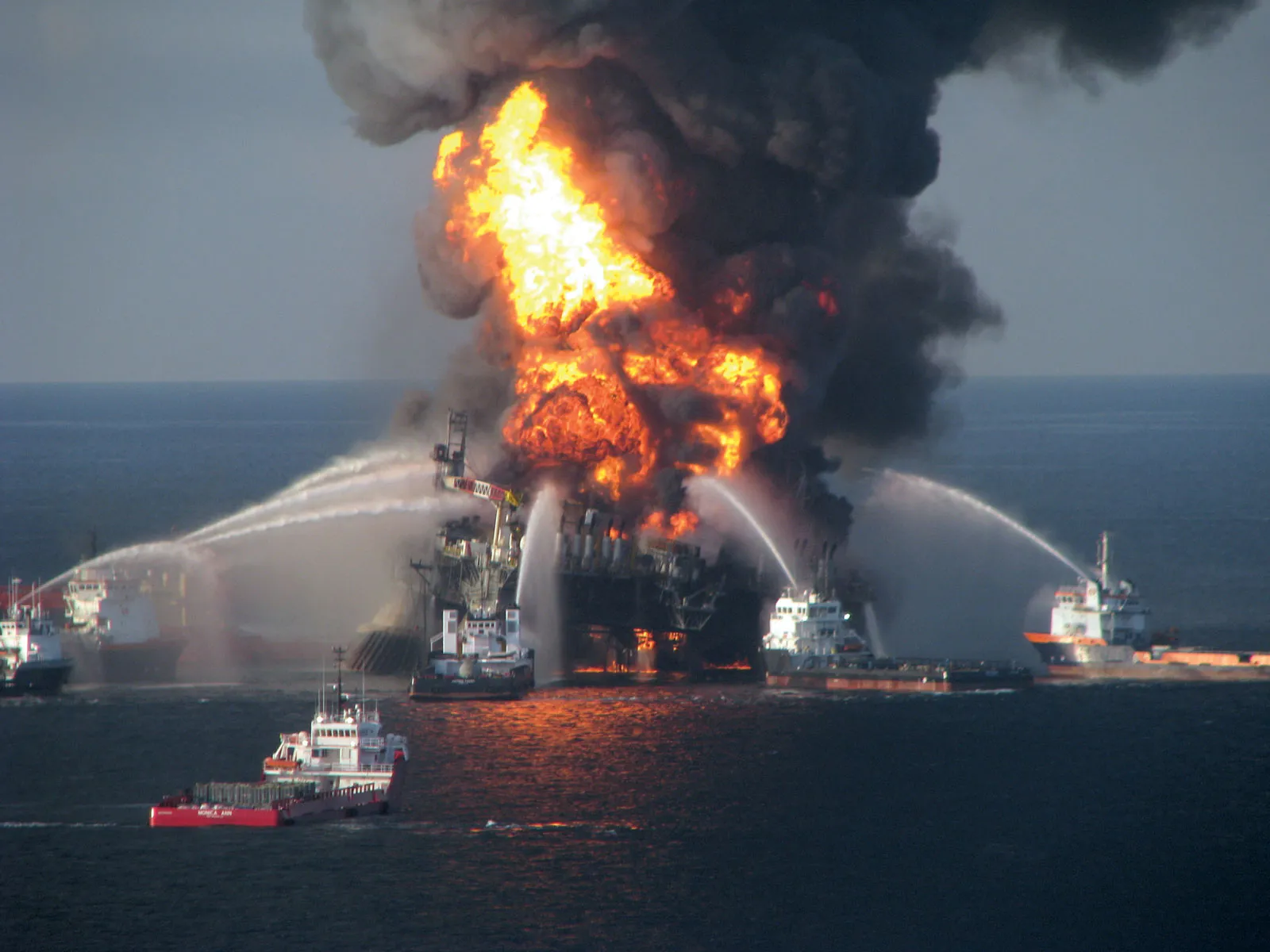
Our Founder and CEO, Josh Politte, witnessed first-hand the deep-water horizon incident in the Gulf of Mexico in 2010 and how that experience has been a major driver in his career for an relentless focus on risk management and Health, Safety, and Environmental practices (HSE). That experience is also a major driver behind Response+ being one of ACT's first commercial products developed in partnership with industry experts. Read more about his experience, his learnings, and how it has shaped his career and the direction of ACT Solutions & Consulting.
Fifteen years ago, on the night of April 20, 2010, I was offshore working a late shift on the Na Kika platform, just 13 miles away from the Deepwater Horizon. At the time, I was a 22-year-old engineer, nine months into my first job. I had no idea that night would permanently alter the course of my life and eventually inspire the creation of one of ACT Solutions & Consulting's first product: Response+
That evening, I was in the control room with a small team, deep into an
optimization project to reduce slugging in the deepwater subsea system. Everything was calm until we
heard a chilling call come over the radio:
"Mayday, Mayday, Mayday... this is Deepwater
Horizon."
We all froze. Heads turned. We looked up the vessel name and realized
quickly it was a BP-contracted rig, operated by Transocean. We were stunned there was no indication
anything had gone wrong, and then just like that, the unimaginable. The Na Kika team sprang into
action relaying communications to the Coast Guard and BP, and calling emergency centers. Roughly an
hour later, we heard the abandon ship call. That's when we realized how serious this was. Preparation
shifted from just communication to preparing Na Kika to serve as a medical and logistics support
platform. The radio operator on Horizon had broadcast just before abandoning post that lifeboats were
deployed and that "bodies are in the water." A friend and I stepped outside, walked to the far edge of
the platform, and stood silently at the railing. In the pitch-black night, we could see it Deepwater
Horizon burning on the horizon. The flames were at least twice as tall as the rig itself. We just
stood there, watching the platform slowly become engulfed in fire and steel knowing that people were
in the water and feeling helpless. It was the quiet before the storm.
That night,
11 people lost their lives.
The platform leadership pulled everyone into an all-hands meeting to walk through the next few hours of the response and medical triage. Our medic began triage prep with Na Kika being designated as a medical support facility. The medic looked at me just a kid at the time and asked if I had a strong stomach. My assigned role? Clipboard, pen, and clock I was to call time of death for anyone who passed in our care. That was a terrifying thing to hear at 22. Thankfully, I didn't have to use that clipboard. But that night, we treated over 10 individuals many injured from the jump. When you jump from an 80-foot railing into the ocean in the pitch-black of night, most people instinctively look down, rotating your center of gravity forward and causing you to hit the water while tumbling. One man broke his ankle hitting a handrail mid-jump. He didn't even realize it until an hour later, once on the Coast Guard helicopter his adrenaline masked the pain. Another survivor arrived with over 60% burns on his body. The Coast Guard had placed him on a bare metal stretcher, and our medic refused to inspect his back, fearing his muscle tissue would be fused to the metal. We gave him morphine and got him out on the first helicopter to a burn unit in New Orleans. That night, Health, Safety, and Environmental (HSE) took on a whole new meaning. I saw what real emergency response looks like. And I saw how critical preparedness, communication, and execution are when lives are on the line.
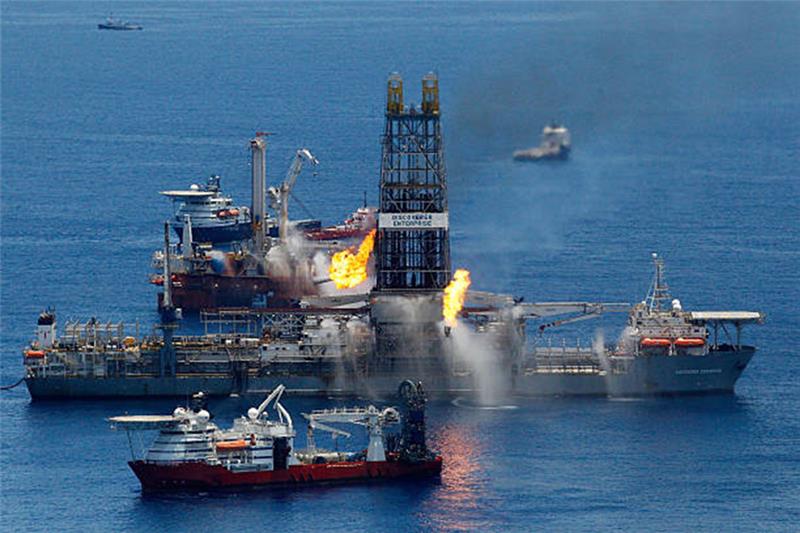
The Deepwater Horizon response left a lasting imprint. It shaped how I
view risk, leadership, and transformation to this day. Here are just a few of the lasting lessons that
influence our work at ACT Solutions:
1. Emergency Response Must Be Real-Time,
Role-Ready, and Relentless You can't coordinate on the fly. The only reason we were able to
treat injured personnel that night was because someone had thought ahead. We had protocols. We had
medical kits. We had a designated medical site. The medic had practiced triage. Everyone had a
role even the 22-year-old with a clipboard. That's why we built Response+: to equip field teams,
operators, and emergency managers with everything they need in the moment contacts, maps, roles,
protocols, and comms in one fast, simple, yet effective solution.
2. Executive
Leadership Presence Can Add Risk if Not Carefully Managed On the day of the explosion,
leadership from Transocean was aboard Deepwater Horizon celebrating seven years without a lost-time
incident a major safety milestone. But ironically, the presence of executives offshore can create
unintended distractions. When leadership visits, I've seen firsthand how operations shift. Projects
and work pause. People get distracted. Preparations intensify. Risk profiles change. Executives should
be mindful of their impact. Their presence must be intentional, safety-aware, and operationally
aligned.
3. Process Safety Cannot Just Be a Checklist It Must Be a Mindset and Way of
Working The Macondo well incident wasn't just a tragic accident it was a cascading failure
in process safety. Public investigations highlighted multiple breakdowns: a misinterpreted pressure
test, failure to detect hydrocarbons, a poorly designed cement job, and an overreliance on the blowout
preventer. Process safety isn't about following procedures or submitting reports. It's about deeply
understanding risks, ensuring safeguards work under real conditions, and fostering a culture where
operational discipline is constant. What happened at Macondo revealed what occurs when warning signs
are missed and systems are ignored. It's a reminder: process safety must be a living, breathing
capability across the workforce embedded into daily operations.
4. Singular Focus
Enables Extraordinary Execution The Enterprise response proved something else: when a team
rallies around a singular objective, it can perform untold feats. From logistics to data to vessel
coordination, the IMT operated like one organism. In business transformation, I've seen the
opposite competing agendas, misaligned stakeholders, bloated programs with mixed vision and purpose.
The lesson: you need one clear mission. Transformation isn't about a thousand initiatives. It's about
doing the right things aligned to your business strategy and goals and doing them pragmatically and
quickly.
At ACT Solutions & Consulting, we're building a suite of tools to support transformation in asset-intensive industries. But Response+ had to be one of our first products. Because this one's personal. Response+ was built with frontline safety and emergency effectiveness in mind. It consolidates critical protocols, maps, emergency comms, hospital routes, triage support, and more into one centralized, offline-accessible solution for teams in the field. When it's your people, your site, your decision there's no time to dig through binders or intranet portals. You need immediate visibility and clear roles. Response+ delivers that.
Fifteen years later, I still remember the intensity of that night the mayday and abandon ship call, the flames in the distance, the anxious breath before the first helicopter landed. It shaped who I am. It shaped how I lead. And it's the reason I believe transformation isn't about platforms or slogans. It's about a clear, strategic vision and pragmatic execution especially when the stakes are high in the energy and industrial industries. We can't undo what happened. But we can build cultures and systems that honor those moments and protect the next generation from repeating them. If you've ever questioned the ROI of preparedness, or treated emergency planning like a compliance task I hope this story stays with you.